Spring is the prime time for home improvement. Whether you’re planting a garden, installing a mailbox or putting up a new fence, many DIY projects include digging. What surprises many homeowners is how little digging it takes to cause serious damage and how many common projects require a call to 811 before you break ground. April is Safe Digging Month, making it the perfect time to consider the basics.
What Is 811?
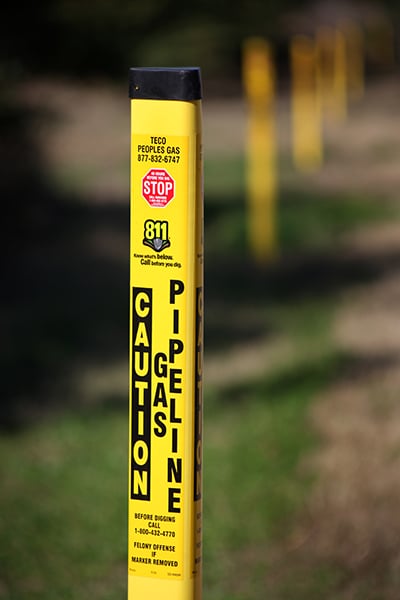
811 is the national “Call Before You Dig” number. When you contact 811 (by phone or online), your local utility companies are notified and send professionals to mark the approximate location of underground utility lines on your property – all at no cost to you.
This service helps identify buried utilities like:
- Natural gas and propane service lines
- Electric lines
- Water and sewer lines
- Communications cables (internet, phone, cable TV)
Calling 811 a few days before digging gives utility locators time to mark these lines, so you know where to dig safely.
Why Is Calling 811 So Important?
Damaging an underground utility can lead to:
- Serious injury or death from electric shock or gas release
- Environmental damage
- Costly repairs and service disruptions
- Legal liability and fines
- Often, many utility damages happen during small‑scale residential projects because homeowners assume their work is “too shallow” to hit a line. Utility lines can be just inches below the surface and may not be where you expect. Even a small mistake can knock out natural gas, power, water, or internet service for an entire neighborhood.
Many Home Projects Should Include a Call to 811
If a project involves digging, trenching, driving stakes, or installing posts—it requires a call to 811. Here are some of the most overlooked projects:
- Landscaping and Gardening
- Planting trees or shrubs
- Installing raised garden beds
- Edging or trenching for landscaping
- Regrading or leveling soil
- Tree roots require deeper holes than most people realize, and many utility lines run through landscaped areas.
Fences, Decks, and Mailboxes
- Installing fence posts
- Building or expanding a deck
- Replacing or adding a mailbox
- Post holes often extend deep enough to hit gas, electric, or communications lines.
Driveways, Walkways, and Hardscapes
- Pouring concrete patios
- Installing pavers or stone pathways
- Digging for retaining walls
- Even shallow excavation can damage utilities if locations are unknown.
Home Upgrades
- Installing irrigation or sprinkler systems
- Adding outdoor lighting
- Putting in a flagpole, pergola, or shed
These projects often involve multiple dig points, increasing the risk of striking a line.
Rule of thumb: If your project breaks ground even by a few inches, give yourself a couple of days to call 811.
Understanding Utility Marking Colors
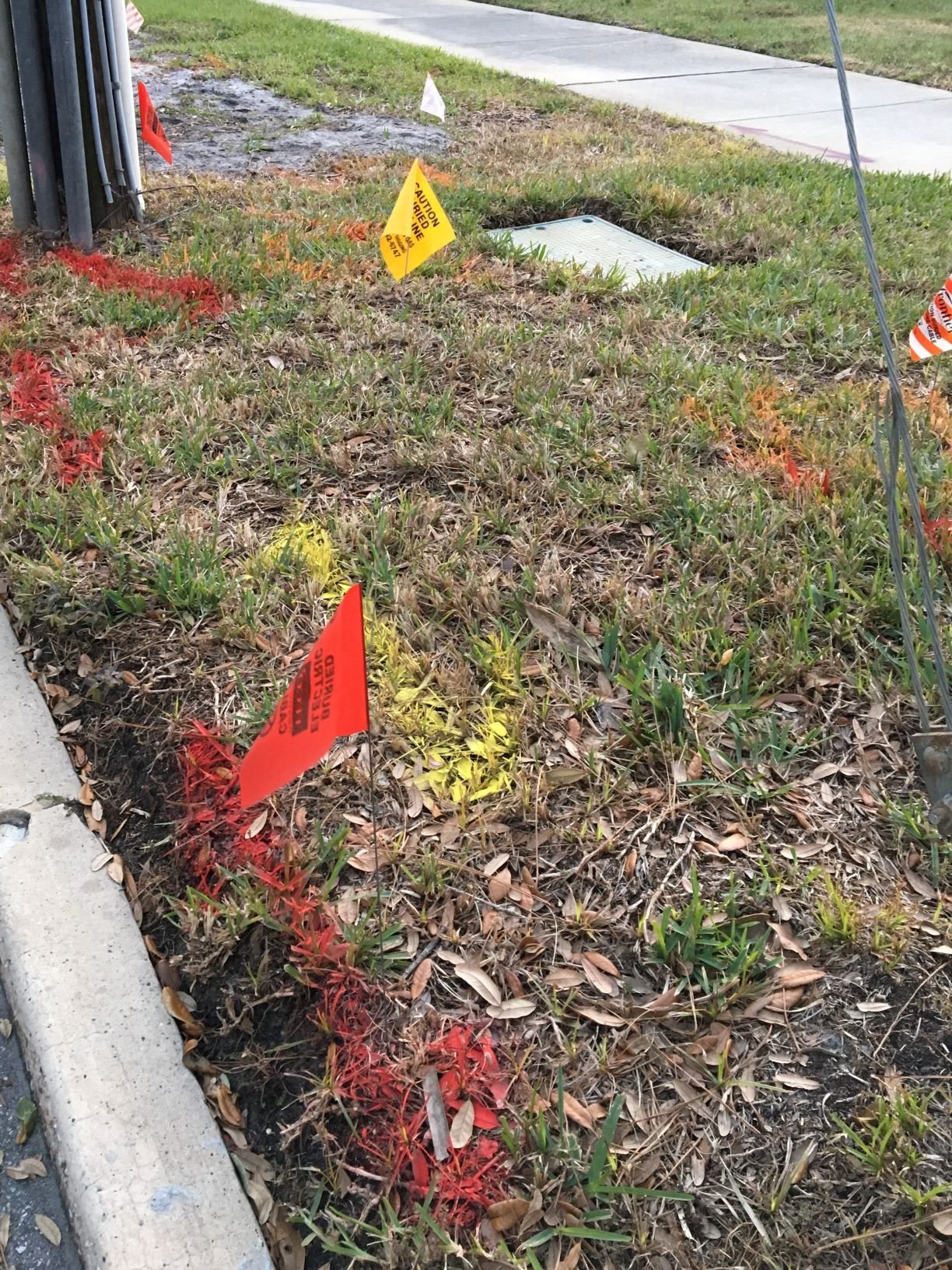
After you call 811, you’ll see colored flags or spray paint appear on your property. These colors follow a national standard and tell you what types of utilities are buried below.
Here’s what each color means:
- Red – Electric power lines, cables, conduit
- Yellow – Natural gas, oil, steam, petroleum lines
- Pink – Current survey markings
- Orange – Communications (internet, cable TV, phone)
- Blue – Potable (drinkable) water
- Green – Sewer and drain lines
- Purple – Reclaimed water or irrigation lines
- White – Proposed excavation
These markings show the approximate location of utilities, not the exact spot, so digging should always be done carefully and by hand when close to marked lines.
A Simple Step That Makes a Big Difference
811 is free, easy, and required by law in Florida. Most requests can be made online in minutes, and utility lines are typically marked within a few business days. If you hire a contractor to do your work, make sure they use 811 before the project begins.
As you plan spring projects, remember:
No matter how small the job is, always call 811 or visit Sunshine 811 before you dig.
It’s a simple step that protects your home, your community, and most importantly your safety.